
European or Brazilian Portuguese?
Olá a todos! Aqui é a Anita.
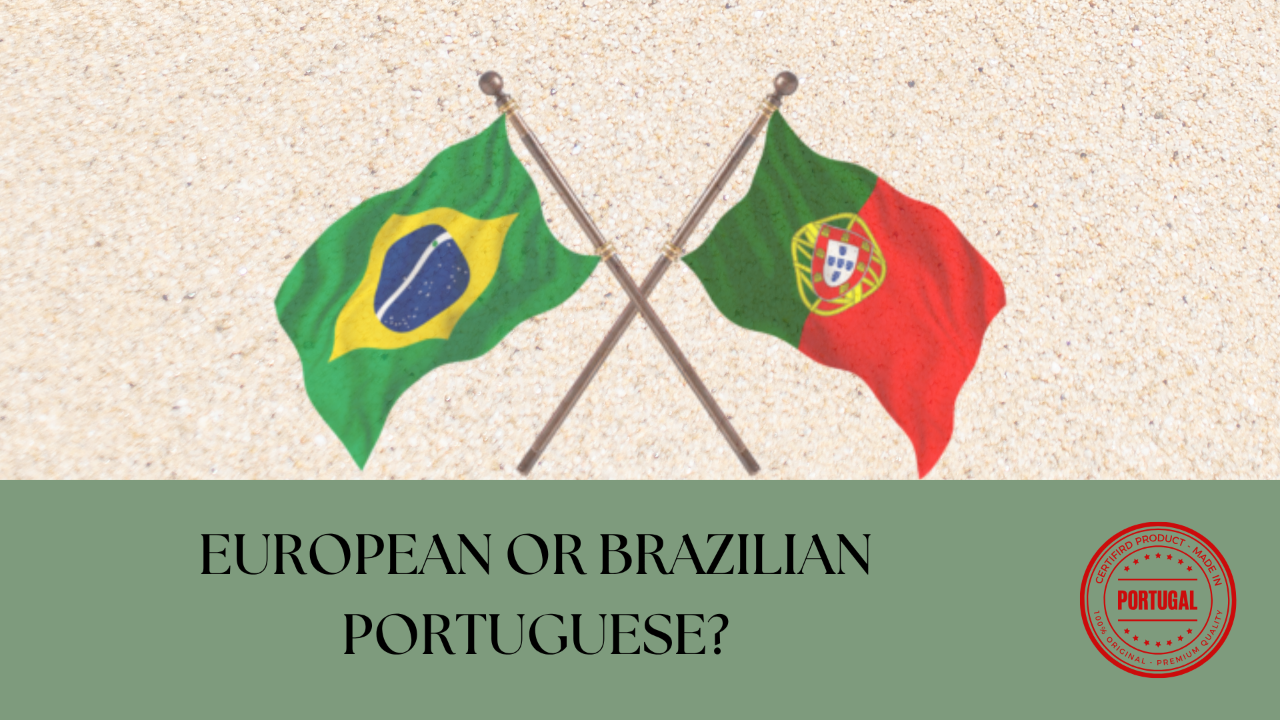
🇬🇧 One question I get from my students quite often is: how different are European Portuguese and Brazilian Portuguese?
They are, of course, the same language, and Portuguese and Brazilian people can understand each other. But if you’re learning European Portuguese, you’ll probably notice that some of the Portuguese you hear online, in apps, or while traveling sounds quite different from what you’re learning with me.
Let’s start with everyday words. In Portugal, we take an autocarro, while in Brazil you’ll hear ônibus. We use a telemóvel instead of celular, eat pequeno-almoço instead of café da manhã, and when we want an ice cream, we ask for a gelado rather than a sorvete.
Then we have some of my favourite differences… the ones that can create very funny misunderstandings!
Here in Portugal, fixe means something is nice or cool. Rapariga is a completely normal word for a young woman, although it can have a very different connotation in Brazil. And bicha can simply mean a queue in Portugal, another word that definitely doesn’t sound the same to Brazilian ears!
Grammar also changes a little. If I want to say “I’m studying Portuguese,” in Portugal I would naturally say “Estou a estudar português.” In Brazilian Portuguese, you’re much more likely to hear “Estou estudando português.” Same idea, different construction.
And then there’s pronunciation!
European Portuguese tends to reduce unstressed vowels much more, which is one of the reasons my students sometimes tell me we sound so fast. Brazilian Portuguese generally has more open and clearly pronounced vowels, so the rhythm of the two variants can feel very different when you first hear them.
I think the important thing is not to see one as more or less Portuguese than the other. They’ve simply developed differently over time, with their own vocabulary, sounds, expressions, and personality.
So if you’re learning European Portuguese with me and suddenly hear a completely different word somewhere else, don’t panic! You probably haven’t learned it wrong.
You’ve just discovered another side of the Portuguese language.
—————————————
🇵🇹Uma pergunta que os meus alunos me fazem com bastante frequência é: em que medida o português europeu e o português brasileiro são diferentes?
São, evidentemente, a mesma língua, e os portugueses e os brasileiros conseguem compreender-se uns aos outros. Mas, se estiveres a aprender português europeu, provavelmente vais notar que parte do português que ouves online, em aplicações ou quando viajas soa bastante diferente do que estás a aprender comigo.
Comecemos pelas palavras do dia a dia. Em Portugal, apanhamos um autocarro, enquanto no Brasil diz-se ônibus. Usamos telemóvel em vez de celular, tomamos pequeno-almoço em vez de café da manhã e pedimos um gelado em vez de um sorvete.
Depois, temos algumas das minhas diferenças favoritas… aquelas que podem dar origem a mal-entendidos muito engraçados!
Aqui em Portugal, fixe significa que algo é giro ou fixe. Rapariga é uma palavra perfeitamente normal para designar uma jovem mulher, embora possa ter uma conotação muito diferente no Brasil. E bicha pode significar simplesmente fila em Portugal, outra palavra que, sem dúvida, não soa da mesma forma aos ouvidos de um brasileiro!
A gramática também muda um pouco. Em Portugal diria naturalmente “Estou a estudar português”. No português do Brasil, é muito mais provável ouvir “Estou estudando português”. A ideia é a mesma, mas a construção é diferente.
O português europeu tende a reduzir muito mais as vogais átonas, o que é uma das razões pelas quais os meus alunos me dizem, por vezes, que parecemos falar muito depressa. O português brasileiro tem, em geral, vogais mais abertas e pronunciadas com maior clareza, pelo que o ritmo das duas variantes pode parecer muito diferente quando as ouvimos pela primeira vez.
E depois há a pronúncia!
Acho que o importante é não considerar uma variante mais ou menos portuguesa do que a outra. Simplesmente evoluíram de forma diferente ao longo do tempo, com o seu próprio vocabulário, sons, expressões e personalidade.
Por isso, se estiveres a aprender português europeu comigo e, de repente, ouvires uma palavra completamente diferente noutro contexto, não entres em pânico! Provavelmente não a aprendeste mal.
Apenas descobriste outra faceta da língua portuguesa.
Até breve,
Anita 🧡
